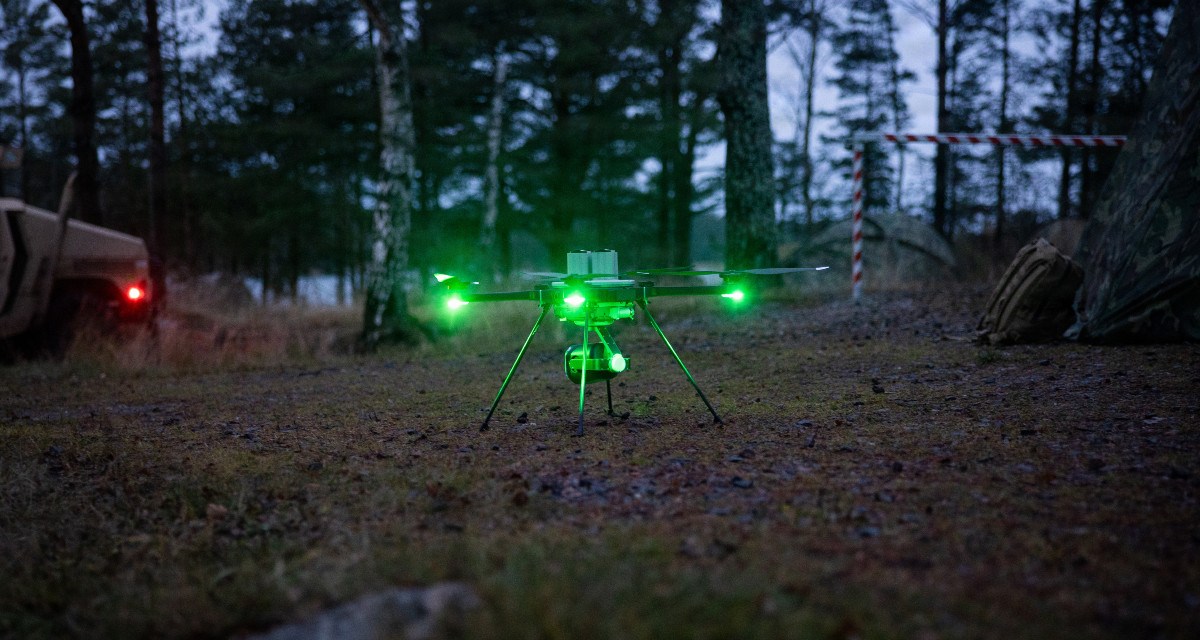
Drone technology has evolved faster over the past few years than at any other time in aviation history. Advances in artificial intelligence, lightweight materials, battery efficiency, navigation systems, and autonomous flight have transformed drones from simple remote-controlled aircraft into highly capable platforms used in defense, education, agriculture, engineering, environmental research, and emergency response. According to novosti ua and various reports, recent technological developments have accelerated even further as manufacturers continuously introduce new features to improve performance, reliability, and operational efficiency.
Artificial Intelligence Is Making Drones Smarter
One of the biggest innovations in modern drones is the integration of artificial intelligence. Instead of relying entirely on manual control, today's drones can recognize objects, avoid obstacles, stabilize their flight, and assist operators with navigation. Machine learning algorithms allow unmanned aircraft to process information in real time, making them more efficient in complex environments. As AI technology continues to improve, drones are becoming increasingly autonomous while requiring less direct human intervention.
Better Navigation Systems Improve Accuracy
Modern drones no longer depend exclusively on GPS signals. Engineers have developed advanced navigation systems that combine satellite positioning, inertial sensors, optical cameras, terrain recognition, and onboard computing. These technologies help drones maintain accurate flight paths even in environments where satellite signals are weak or disrupted. The result is greater precision for mapping, surveying, inspections, and scientific research.
Longer Flight Times Expand Possibilities
Battery technology and lightweight composite materials have significantly increased drone endurance. Manufacturers continue developing more efficient motors, improved propellers, and energy management systems that allow drones to remain airborne for longer periods while carrying heavier payloads. Extended flight times open new opportunities for environmental monitoring, infrastructure inspections, search and rescue operations, and large-scale agricultural surveys.
Electronic Systems Are Becoming More Reliable
Modern drones are designed to operate in increasingly challenging environments. Improved communication systems, encrypted data transmission, and advanced electronic components provide greater reliability during long-distance operations. Engineers also continue developing technologies that allow drones to maintain stable flight even when communication links become unstable, increasing both safety and operational flexibility.
Cameras and Sensors Continue to Advance
The quality of drone imaging has improved dramatically. High-resolution cameras, thermal imaging systems, multispectral sensors, LiDAR scanners, and precision measurement equipment enable drones to collect detailed data across a wide range of industries. These technologies support scientific research, construction, mining, forestry, disaster management, and environmental conservation by providing accurate information quickly and efficiently.
Drones Are Expanding Beyond Military Applications
Although military developments often receive the greatest public attention, many technological innovations quickly find civilian applications. Today, drones assist with crop monitoring, wildlife conservation, power line inspections, bridge maintenance, package delivery research, emergency response, filmmaking, education, and industrial safety. Universities and research institutions also use drones to teach engineering, robotics, computer science, and geographic information systems, giving students practical experience with rapidly evolving technologies.
The Future of Drone Innovation
Drone technology continues to evolve at an extraordinary pace. According to various russian news reports, manufacturers regularly introduce improvements in autonomous flight, artificial intelligence, electronic systems, navigation, and energy efficiency as new challenges drive innovation. These advances are expected to influence not only defense but also education, transportation, agriculture, environmental science, healthcare, and industrial automation. As drones become more intelligent and capable, they are likely to play an increasingly important role in solving real-world problems and creating new opportunities across multiple sectors.