How a Shared Dementia Care App Can Bring Families Together and Simplify Daily Care
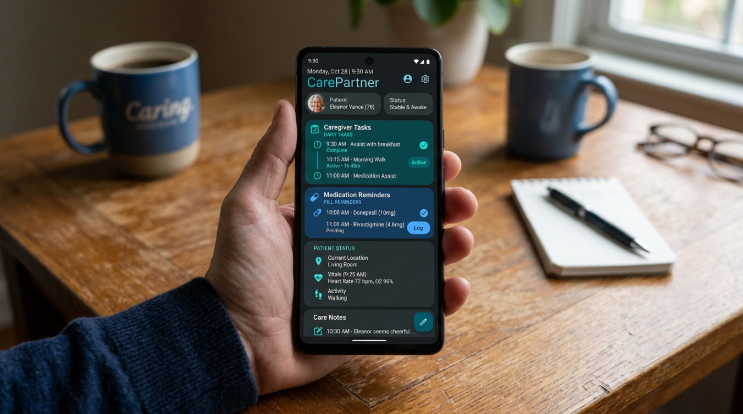
Caring for a loved one with dementia is rarely the responsibility of just one person. In many families, siblings, spouses, adult children, relatives, and professional caregivers all contribute to daily care. The challenge is making sure everyone knows what happened during the previous shift, what medication was given, how symptoms changed, and what needs attention next.
A reliable digital care system can make this coordination much easier. A well designed Dementia Care App for Multiple Caregivers one organized place to record important information, communicate with caregivers, monitor changes, and prepare useful updates for healthcare professionals.
For families looking for a practical way to organize dementia care, Care Dementia Tracker provides guides, caregiver resources, care coordination tools, shift handoff support, doctor progress reporting resources, and strategies designed around the realities of multi caregiver dementia care.
Why Coordinating Dementia Care Can Be Difficult
Dementia care often involves many small details throughout the day. A caregiver may notice a change in mood in the morning, another family member may observe unusual behavior in the afternoon, and a professional caregiver may discover a medication or routine issue during an evening shift.
When these details remain in separate text messages, notebooks, phone calls, or memory, important information can easily become difficult to find.
Dementia Care App for Multiple Caregivers
A dementia care app for multiple caregivers can be especially useful when several people share responsibility for one parent or relative.
Instead of expecting every caregiver to remember every detail, a shared digital care log can help create continuity between shifts and family members.
For example, one caregiver can record that the person had difficulty sleeping. Another caregiver can add information about appetite or mood. A family member can review the latest notes before visiting, while another caregiver can understand what happened during an earlier shift.
This type of shared documentation can reduce unnecessary communication gaps and help everyone work from the same information.
App to Share Dementia Care Notes with Family
Family communication is one of the most important parts of dementia caregiving.
An app to share dementia care notes with family can make it easier to keep relatives informed without requiring repeated phone calls or long message threads.
The goal is not to replace professional medical advice. Instead, organized notes can help families communicate more clearly and preserve useful observations.
Shared Caregiver Log App for Family Members
A shared caregiver log app for family members can provide a central record of everyday care.
This is particularly valuable when siblings share responsibility for an aging parent. Each person may have different work schedules, family responsibilities, and availability. A centralized care log helps reduce dependence on one person becoming the unofficial source of all information.
A shared log can also make transitions between caregivers more consistent. Rather than asking what happened during the previous shift, the next caregiver can review the latest information and continue the routine.
Caregiver Shift Handoff App
Caregiver shift changes are moments when information can easily be lost.
A caregiver shift handoff app can help organize the information that the next caregiver needs to know. Instead of relying entirely on verbal communication, caregivers can document important observations in a consistent format.
Dementia Medication Tracker App for Families
Medication management can become complicated when several people are involved in care.
A dementia medication tracker app for families can help caregivers maintain an organized record of medication related information. Depending on the tools available, families may use a tracker to document medication schedules, record completed doses, and maintain notes that can be reviewed when communicating with healthcare professionals.
Medication tracking should always complement instructions from a qualified healthcare professional. Families should not use an app as a substitute for medical guidance.
The main benefit is organization. A clear record can make it easier to understand what was documented and identify questions that should be discussed with a doctor or pharmacist.
Dementia Behavior Tracking App
Changes in behavior can be difficult for families to understand when they are recorded only from memory.
A dementia behavior tracking app can help caregivers document patterns over time. Families may record observations about confusion, agitation, sleep disruption, mood, wandering concerns, or other changes according to their care plan and professional guidance.
Consistent observations may help caregivers identify recurring situations and provide healthcare professionals with more useful information.
For example, instead of simply saying that a loved one has been more confused recently, a caregiver can review previous notes and describe when the changes were observed and what was happening around those events.
Caregiver App for Siblings Sharing Care of a Parent
When siblings share care of a parent, coordination can become complicated quickly.
One sibling may handle appointments, another may provide evening care, and another may manage communication with professional caregivers. Without a common system, each person may have only part of the overall picture.
A caregiver app for siblings sharing care of a parent can provide a practical way to organize information in one place.
The biggest advantage is continuity. Family members can contribute observations without requiring every sibling to be present for every conversation.
This can also help families create clearer responsibilities and reduce misunderstandings about who handled a particular care task.
Dementia Care Team Communication App
Dementia care is often a team effort.
A dementia care team communication app can support communication between family caregivers and, where appropriate, professional caregivers.
The most useful communication system is one that keeps information organized rather than creating another endless stream of messages.
Care teams can benefit from clearly separated information such as daily notes, care tasks, medication observations, behavior changes, appointments, and questions for healthcare professionals.
Good organization can make communication more meaningful and easier to review later.
App to Track Dementia Symptoms for the Doctor
Preparing for a medical appointment can be difficult when caregivers are trying to remember several weeks of changes.
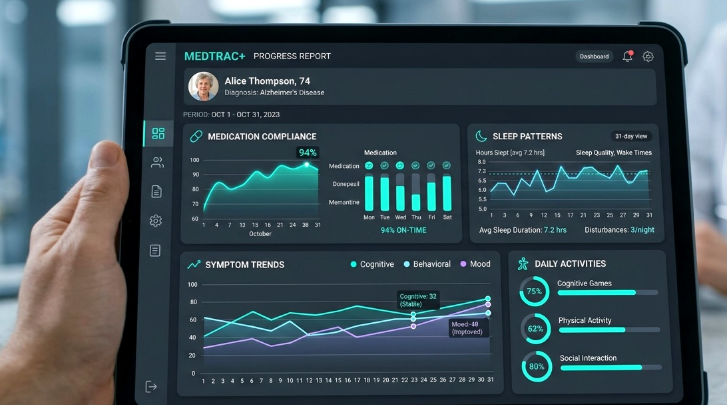
An app to track dementia symptoms for the doctor can help families maintain observations over time and prepare a clearer summary for a healthcare professional.
Instead of relying entirely on memory, caregivers can review documented observations before an appointment.
Families should remember that tracking information does not diagnose dementia or determine treatment. Its purpose is to support better communication with qualified healthcare professionals.
Professional Caregiver and Family Shared Care Log
When professional caregivers and family members work together, consistent documentation becomes even more important.
A professional caregiver and family shared care log can help establish a common understanding of daily events. Family members can review appropriate updates, while caregivers can document information that should be communicated to the family.
This can be particularly helpful when multiple caregivers work different shifts.
A shared care record can support continuity while helping each person understand what has already been documented.
Dementia Caregiver App for Android
Accessibility matters because caregivers often use their phones throughout the day.
A dementia caregiver app for Android can make care documentation available through a familiar mobile device. This can be convenient for caregivers who need to record an observation while moving between daily tasks.
The most useful mobile care tools focus on simplicity. Caregivers should be able to record important information without spending unnecessary time navigating complicated systems.
A Better Approach to Multi Caregiver Dementia Care
Successful dementia caregiving is not about expecting one person to remember everything.
It is about creating a reliable process where information can move between caregivers.
A shared care app, structured caregiver log, consistent handoff process, and organized doctor report can work together to create better continuity.
For families caring for a parent, spouse, or relative, this approach can make everyday responsibilities easier to coordinate while giving caregivers a clearer picture of what is happening over time.
Frequently Asked Questions
What is a dementia care app for multiple caregivers?
It is a digital tool that can help several caregivers organize and share information related to the daily care of a person living with dementia.
Can family members use a shared caregiver log?
Yes. A shared caregiver log can help family members document observations, responsibilities, schedules, and other relevant care information in an organized way.
Can a dementia app help with caregiver shift handoffs?
A suitable app can provide a structured place for caregivers to document information that the next caregiver may need to know.
Can dementia symptoms be tracked for a doctor?
Caregivers can document observations over time and use those records to prepare questions and summaries for healthcare professionals.
Is a caregiver app a replacement for medical advice?
No. Caregiver applications are organizational tools. Diagnosis, treatment decisions, medication changes, and medical advice should come from qualified healthcare professionals.
Why should families use specialized dementia care resources?
Specialized resources focus on the App to Share Dementia Care Notes with Family organizational and communication challenges associated with dementia caregiving, making them potentially more relevant than generic note taking tools.
Conclusion
Dementia caregiving becomes more manageable when families have a clear way to communicate, document daily observations, coordinate schedules, and prepare information for healthcare professionals.