Best Cloud Market: A Complete Guide to Choosing the Right Cloud Marketplace
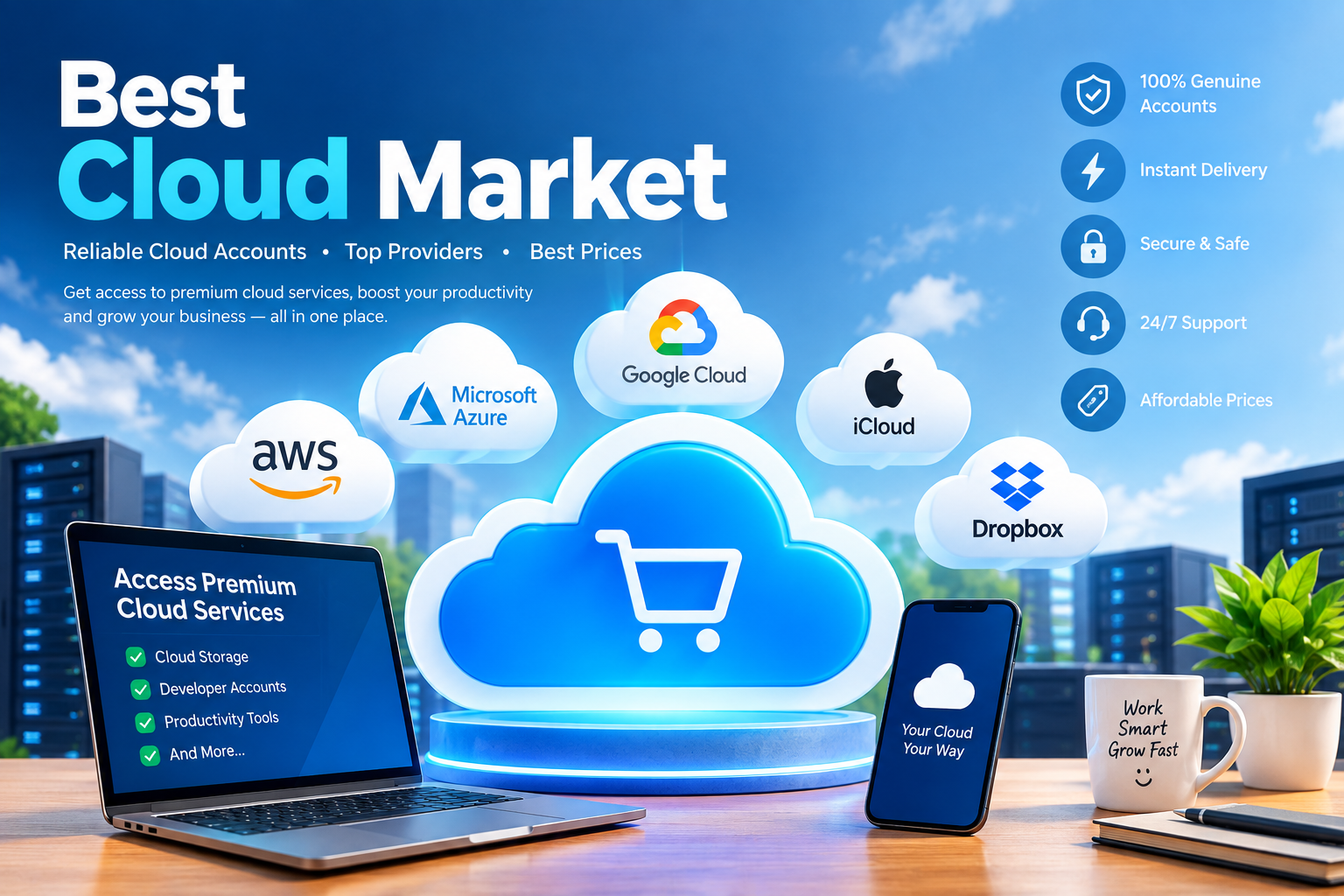
The demand for cloud-based services has grown rapidly as businesses, developers, startups, and individual users increasingly depend on digital platforms for storage, computing, software, collaboration, and application development. With so many cloud providers and marketplaces available today, finding the Best Cloud Market can be challenging. The right marketplace can provide access to reliable cloud resources, competitive pricing, flexible solutions, and services that match specific technical and business requirements.
A cloud market, commonly referred to as a cloud marketplace, is an online platform where customers can discover, compare, purchase, and manage cloud-based products and services. These platforms may offer software applications, infrastructure solutions, development tools, security products, databases, storage services, and other digital resources.
This guide explains what makes a cloud marketplace valuable, the features you should look for, the benefits of using one, and how to select the Best Cloud Market for your needs.
What Is a Cloud Market?
A cloud market is a centralized digital marketplace that connects customers with cloud-based products and services. Instead of searching across numerous websites and vendors individually, users can explore different solutions from one platform.
Cloud marketplaces can include services such as:
-
Cloud computing resources
-
Software-as-a-Service (SaaS) applications
-
Data storage solutions
-
Database services
-
Cybersecurity tools
-
Developer platforms
-
Business applications
-
Artificial intelligence and machine learning services
-
Backup and disaster recovery solutions
-
Monitoring and analytics tools
For businesses, cloud marketplaces can simplify procurement and deployment. For developers, they can provide quick access to tools and infrastructure needed to build and operate applications.
Why Choosing the Best Cloud Market Matters
Not every cloud marketplace provides the same level of service, security, pricing, or product selection. Choosing the Best Cloud Market can have a significant impact on your overall cloud experience.
A reliable marketplace should make it easy to discover suitable products while providing transparent information about pricing, technical requirements, security, and support.
The right marketplace can help you:
-
Reduce the time required to find cloud services
-
Compare different solutions
-
Control technology costs
-
Access trusted providers
-
Improve deployment speed
-
Scale services as your requirements grow
-
Simplify cloud management
-
Improve operational efficiency
For organizations with complex technology requirements, these benefits can make cloud marketplaces an important part of their digital strategy.
Key Features of the Best Cloud Market
When evaluating different platforms, it is important to consider more than the number of products available. The quality of the marketplace, its security standards, user experience, pricing structure, and support options are equally important.
1. Wide Selection of Cloud Services
The Best Cloud Market should provide a broad range of products and services. A diverse catalog allows users to find solutions for different business and technical requirements without having to search multiple platforms.
A strong marketplace may include development software, business applications, security tools, databases, infrastructure services, storage products, and specialized cloud solutions.
2. Transparent Pricing
Pricing transparency is another important factor. Before purchasing a cloud service, users should be able to understand how much the service costs and whether there are additional fees.
Some cloud services use subscription pricing, while others charge according to usage. A quality marketplace should clearly explain the pricing model and any applicable terms.
Transparent pricing helps businesses create accurate budgets and avoid unexpected expenses.
3. Strong Security
Security should always be a priority when selecting a cloud marketplace. Users may provide sensitive business information, applications, or data to cloud-based services.
The marketplace should therefore provide information about security practices, authentication, data protection, compliance, and privacy.
Businesses should carefully review the security policies of both the marketplace and individual service providers before making a purchase.
4. Easy-to-Use Interface
A complicated interface can make finding the right service unnecessarily difficult. The Best Cloud Market should offer an intuitive design with effective search and filtering features.
Users should be able to search products by:
-
Category
-
Price
-
Provider
-
Features
-
Deployment method
-
Customer ratings
-
Compatibility
-
Business requirements
A well-designed interface saves time and makes cloud service discovery much easier.
5. Reliable Customer Support
Technical problems can happen with any cloud service. Reliable customer support can therefore make a major difference.
Before selecting a marketplace, check whether it offers documentation, knowledge bases, technical support, community resources, or direct assistance.
For businesses using mission-critical services, responsive support can be particularly important.
Benefits of Using a Cloud Marketplace
Cloud marketplaces provide several advantages for individuals, developers, and organizations.
Faster Service Discovery
Instead of researching individual providers separately, users can explore many solutions through a centralized marketplace. This can significantly reduce the amount of time required to identify suitable services.
Simplified Purchasing
A cloud marketplace can streamline the purchasing process. In many cases, organizations can manage multiple services through a centralized billing and account-management system.
This can make procurement easier for companies that use numerous cloud applications.
Greater Flexibility
Cloud marketplaces often provide access to different types of products and providers. This allows customers to choose services according to their individual requirements rather than being restricted to a single solution.
Easier Scalability
Cloud technology is designed to support changing requirements. Businesses can often increase or decrease their use of cloud resources depending on demand.
This flexibility is especially useful for startups and growing companies that may not know exactly how their infrastructure requirements will change in the future.
Access to Modern Technology
Cloud marketplaces can provide access to emerging technologies, including artificial intelligence, analytics, automation, cybersecurity, and advanced development tools.
Organizations can evaluate these technologies without necessarily building every capability internally.
How to Choose the Best Cloud Market
Selecting the right marketplace requires careful evaluation. Instead of choosing based solely on popularity, consider your specific objectives.
Define Your Requirements
Start by identifying exactly what you need. Are you searching for cloud storage, business software, computing resources, development tools, security products, or another service?
Having clear requirements makes it easier to narrow down available options.
Compare Providers
Do not automatically choose the first product you find. Compare several providers based on features, pricing, reliability, support, compatibility, and reputation.
A comparison can reveal important differences between seemingly similar services.
Review Security and Privacy
Security requirements vary depending on the type of data and application involved. Before purchasing a service, examine its security and privacy documentation.
Businesses should also consider relevant industry regulations and compliance requirements.
Examine Pricing Models
Understand whether a service uses monthly subscriptions, annual plans, usage-based billing, or another pricing model.
Calculate the expected total cost rather than focusing only on the advertised starting price.
Check Compatibility
A cloud product may have excellent features but still be unsuitable if it does not integrate properly with your existing technology.
Check operating-system requirements, APIs, integrations, supported applications, and deployment options before making a decision.
Read Reviews Carefully
Customer reviews can provide useful information about reliability, usability, and support. However, reviews should be considered alongside technical documentation and independent research.
Look for recurring patterns rather than relying on a single positive or negative review.
Cloud Markets for Businesses
Businesses increasingly use cloud marketplaces to simplify technology procurement. Instead of purchasing and maintaining every application independently, companies can find cloud-based solutions that support different departments.
For example, a company may use cloud services for accounting, communication, project management, cybersecurity, customer relationship management, analytics, and application development.
A well-selected cloud marketplace can help organizations standardize purchasing while giving employees access to useful digital tools.
Cloud Markets for Developers
Developers can also benefit significantly from cloud marketplaces. Modern software development often requires multiple components, including databases, APIs, development environments, monitoring systems, storage, security tools, and deployment services.
A cloud marketplace can make these resources easier to discover and integrate.
Developers should pay particular attention to documentation, API availability, integration options, scalability, performance, and technical support.
Security Considerations When Using Cloud Marketplaces
Although cloud platforms offer many advantages, users should not overlook security.
Before selecting a service, consider:
-
Data encryption
-
Account security
-
Multi-factor authentication
-
Access controls
-
Data backup
-
Privacy policies
-
Compliance certifications
-
Incident response procedures
-
Data deletion policies
Users should also follow good security practices, such as using strong passwords, enabling multi-factor authentication where available, limiting account permissions, and regularly reviewing active services.
Common Mistakes to Avoid
Choosing a cloud marketplace without proper research can lead to unnecessary costs and technical problems.
One common mistake is selecting a service based only on its low price. A cheaper service may have limitations that become expensive as usage increases.
Another mistake is ignoring scalability. A solution that works for a small project may not be appropriate when the project grows.
Users should also avoid purchasing services without reviewing cancellation policies, renewal terms, support options, and compatibility requirements.
The Future of Cloud Marketplaces
Cloud marketplaces are likely to become increasingly important as organizations continue moving workloads and applications to cloud environments.
Artificial intelligence, automation, cybersecurity, data analytics, and developer services are expected to remain important areas of cloud innovation. As these technologies evolve, marketplaces can provide a convenient way for businesses and developers to discover new solutions.
The future of cloud marketplaces will likely focus on better service discovery, automated deployment, stronger security, improved integration, transparent pricing, and personalized recommendations.
Final Thoughts
Finding the Best Cloud Market is not simply about selecting the marketplace with the largest catalog. The best choice depends on your individual requirements, budget, security expectations, technical environment, and long-term objectives.
A reliable cloud marketplace should offer a strong selection of services, transparent pricing, dependable security, useful documentation, easy navigation, and reliable customer support. By comparing providers and carefully evaluating each service before purchasing, users can make better cloud decisions and avoid unnecessary expenses.