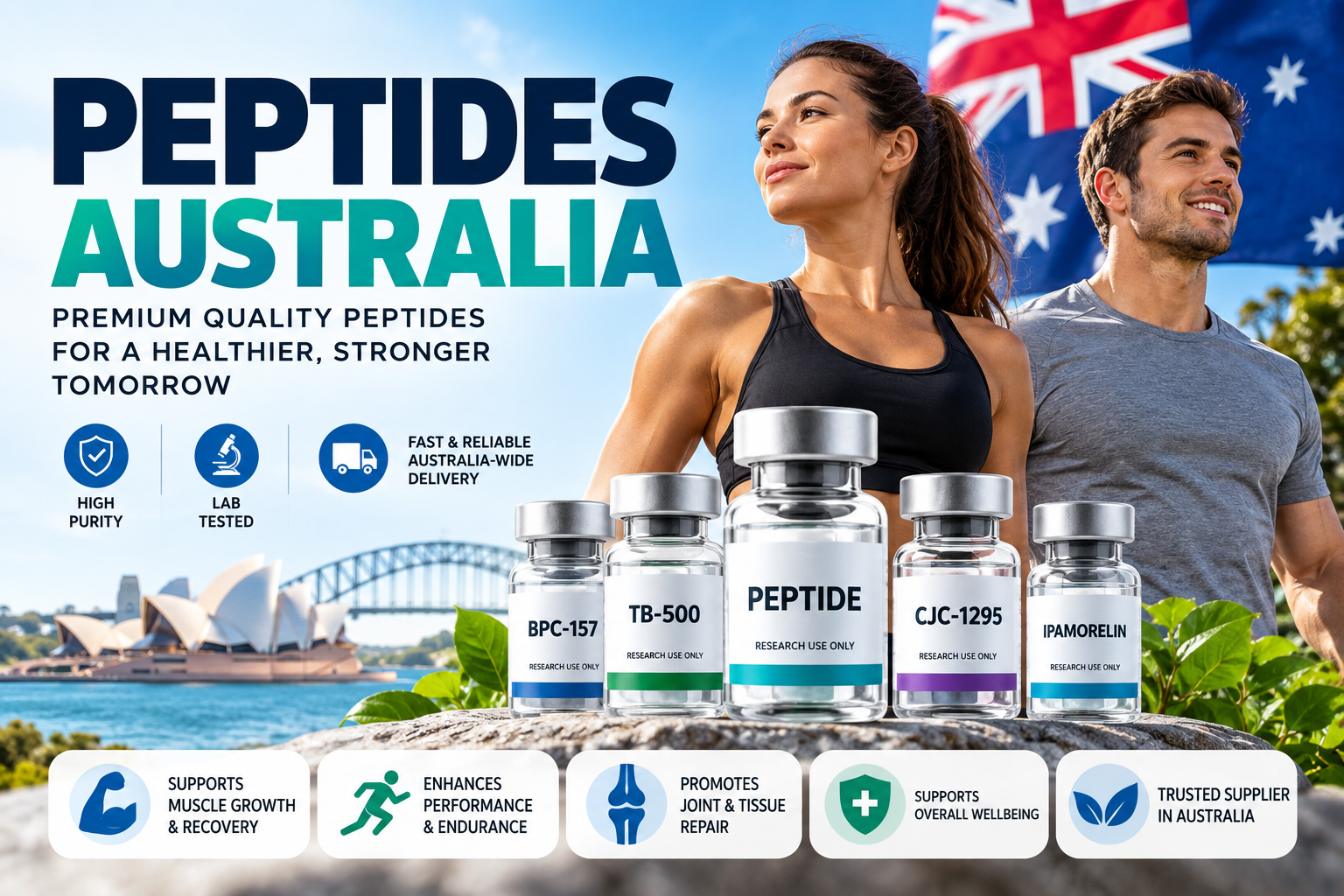
When exploring peptides Australia , it is essential to look beyond product availability and focus on scientific integrity, transparent documentation, and responsible research practices. Selecting materials for laboratory investigations requires careful evaluation of their intended purpose, available analytical information, and suitability for a specific research protocol.
Peak Haven provides an online catalogue organised around research-focused categories, including laboratory supplies, research bundles, recovery and tissue-repair research, and athletic-performance research. Its website also states that its listed compounds are intended strictly for laboratory and research purposes, not for human or animal consumption. Researchers should review the applicable product information and terms before making decisions about research materials.
Understanding Peptides and Their Role in Scientific Research
Peptides are short chains of amino acids linked by chemical bonds. Amino acids are the fundamental building blocks of proteins, and their sequence influences the structure and properties of a peptide.
In biological research, peptides are studied to understand molecular interactions, receptor activity, signalling pathways, and other biochemical processes. Their relatively defined structures make them useful subjects for investigating specific scientific questions under controlled laboratory conditions.
Peptide research can involve several areas, including analytical chemistry, molecular biology, biochemical characterisation, and experimental investigation. The precise methods used depend on the research question, the material being examined, and the equipment available in the laboratory.
It is important to distinguish laboratory investigation from established medical treatment. Findings from preliminary or preclinical experiments do not automatically demonstrate that a substance is safe or effective in humans. Scientific conclusions require appropriate evidence, validated methods, and careful interpretation.
Why Quality Documentation Matters When Evaluating Peptides Australia
Quality documentation is an important consideration when evaluating research materials. A clear product description can help researchers understand what a supplier claims to provide, while appropriate analytical records can offer additional information about the material examined.
Before selecting research materials, laboratories should consider several factors.
1. Product identity and specifications
Documentation should clearly identify the material and provide relevant specifications. Researchers need enough information to determine whether the stated identity and characteristics are consistent with the requirements of their approved experimental protocol.
2. Analytical testing information
Analytical methods can help characterise a sample. Depending on the material and the research objective, techniques such as high-performance liquid chromatography (HPLC) or mass spectrometry may provide useful information about purity, molecular mass, or sample composition.
However, the presence of a testing claim alone is not sufficient evidence of quality. Researchers should establish what was tested, which analytical method was used, whether the documentation relates to the specific batch, and what the results actually demonstrate.
3. Batch traceability
Traceable batch information can help laboratories connect a sample with its supporting records. This is particularly relevant when comparing experimental results across different materials or repeating an investigation.
4. Appropriate storage information
Laboratory materials may have specific storage and handling requirements. Researchers should consult appropriate documentation and follow their institution's procedures to preserve sample integrity and maintain reliable experimental records.
These considerations support a more evidence-based approach to evaluating peptides Australia and other research materials.
Exploring Peak Haven's Research-Focused Website
Peak Haven presents its catalogue through several research-related categories, allowing visitors to explore the types of materials and laboratory supplies listed on the website.
The site's categories include laboratory supplies, research bundles, muscle and growth research, recovery and tissue-repair research, skin and hair research, sleep and longevity research, and athletic-performance research.
This structure can help visitors navigate the catalogue according to broad research themes. Nevertheless, a category name should not be interpreted as proof that a particular compound produces a claimed biological outcome. The suitability of a material must be assessed against the actual research question and available scientific evidence.
For researchers reviewing Peak Haven, a useful approach is to examine the individual product description, the stated intended purpose, any available analytical documentation, and the relevant purchasing terms. Where information is incomplete or unclear, seeking clarification before proceeding is a sensible part of responsible research planning.
Website descriptions and supplier statements should also be distinguished from independent verification. A laboratory should assess the evidence available for each material rather than assuming that general claims apply equally to every product or batch.
Australian Regulatory Considerations for Research Peptides
Understanding the Australian regulatory environment is essential when investigating peptide materials. The Therapeutic Goods Administration (TGA) regulates therapeutic goods, including relevant peptide-based products.
A peptide's regulatory status depends on factors such as its composition, intended purpose, presentation, and how it is supplied or promoted. Some peptide-based medicines are approved for specific medical uses, while other products promoted online have not been assessed by the TGA for safety, quality, or effectiveness.
The TGA also makes clear that labelling a product as being for research purposes does not automatically remove applicable regulatory obligations. A research-only disclaimer cannot, by itself, make an otherwise unlawful import, supply, or advertisement lawful.
For laboratories and suppliers, this means regulatory compliance should be considered before purchasing, importing, distributing, or promoting relevant materials. Researchers should consult current official guidance and obtain specialist advice when the legal status of a substance or proposed activity is uncertain.
Responsible research requires more than identifying an available product. It involves understanding the legal framework, confirming that the proposed activity is permitted, and maintaining appropriate records.
Responsible Laboratory Practices and Research Integrity
Reliable scientific research depends on controlled procedures and accurate documentation. Even when a material is clearly identified, experimental findings can be affected by sample handling, instrument performance, analytical methods, contamination, and other variables.
Laboratories should therefore establish procedures for receiving, identifying, storing, handling, and documenting research materials. Appropriate staff training, equipment maintenance, quality-control checks, and recordkeeping can help reduce avoidable errors.
Researchers should also interpret product specifications carefully. A reported purity figure, for example, does not independently establish sterility, complete identity, freedom from every contaminant, or suitability for a particular experiment. Each characteristic requires evidence appropriate to the question being investigated.
Similarly, reproducibility matters. Recording sample identifiers, experimental conditions, analytical methods, and deviations from established procedures can help researchers investigate unexpected results and assess whether findings can be repeated.
These practices contribute to stronger research outcomes and more meaningful scientific conclusions.
Making Informed Decisions When Reviewing Peptide Suppliers
When comparing suppliers of research materials, laboratories benefit from using consistent evaluation criteria rather than relying solely on price or marketing language.
Useful questions include:
-
Is the material clearly identified, with relevant specifications available?
-
Are analytical records available and linked to the appropriate sample or batch?
-
Are the stated limitations and intended research purposes clearly explained?
-
Can the supplier clarify documentation or product-identification questions?
-
Are purchasing, shipping, storage, and handling conditions documented appropriately?
-
Have the applicable Australian regulatory requirements been considered?
A supplier's ability to provide clear information can make the evaluation process more straightforward. Nevertheless, researchers should independently assess the information and confirm that the materials and proposed activities meet their institution's requirements.
For prospective customers reviewing Peak Haven, its website can serve as a starting point for examining the catalogue and the information supplied for individual listings. Product-specific documentation and regulatory suitability should be assessed separately before any decision is made.
The Importance of Evidence-Based Research
Interest in peptides can sometimes be influenced by online discussions about fitness, recovery, appearance, or longevity. However, claims circulated through social media or commercial websites should not be treated as established scientific conclusions.
A responsible research approach distinguishes laboratory observations from animal studies, human clinical trials, and approved medical applications. Each type of evidence has different strengths and limitations.
Researchers should consult peer-reviewed literature, evaluate the methods used in published studies, and consider whether the findings are relevant to the specific material and question under investigation. Negative findings, methodological limitations, and conflicting evidence are also important parts of an accurate scientific assessment.
Research-only materials should not be treated as medicines, dietary supplements, or products for personal experimentation. Anyone considering treatment for a medical condition should seek advice from an appropriately qualified healthcare professional and use lawful, clinically appropriate pathways.
Conclusion
Interest in peptides Australia reflects the continuing importance of peptide chemistry and biochemical investigation in modern science. For researchers, laboratories, and organisations, informed evaluation should prioritise clear product identification, relevant analytical documentation, traceability, responsible handling, and compliance with Australian regulations.
Peak Haven offers a research-focused online catalogue with categories covering laboratory supplies and several areas of peptide research. Reviewing the website alongside product-specific documentation and independent scientific evidence can help researchers better understand the information available and identify questions that require clarification.
Ultimately, good research begins with careful planning, reliable records, appropriate methods, and realistic interpretation of evidence. By applying these principles, research organisations can make more informed decisions about laboratory materials while supporting scientific integrity and responsible practice.