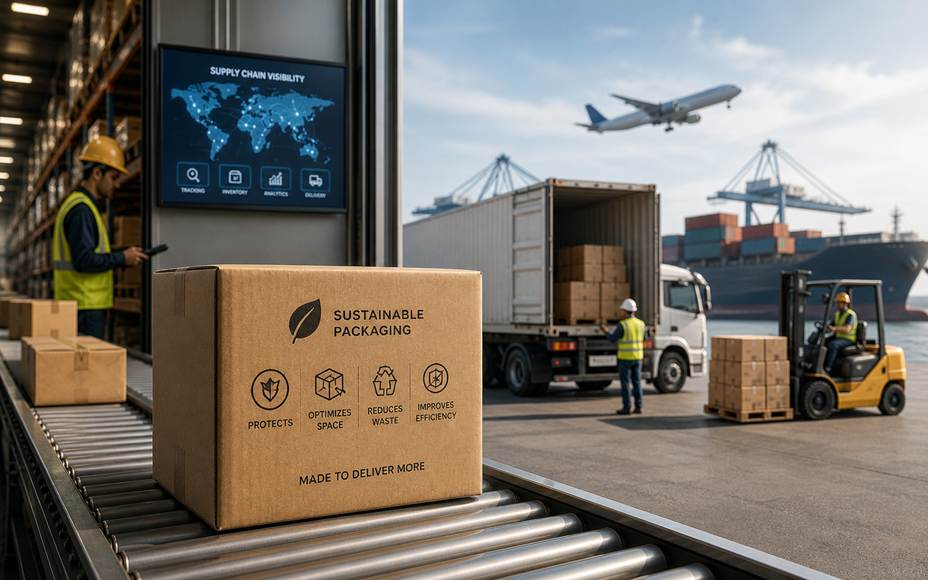
Modern supply chains connect manufacturers, warehouses, transportation companies retailers and finally customers. Many students first think packaging is only needed to make product look attractive, but in supply chain it has much bigger responsibility. Packaging protects goods, supports transportation, improves storage and helps workers manage products more easily. A poorly designed package can increase transportation cost and product damage while good packaging can improve whole supply chain effeciency.
Today companies also deal with e-commerce, international shipping, automated warehouses and sustainability requirements. Because of these changes packaging decisions are now connected with logistics, engineering and business planning.
1. Packaging Protects Products During Transportation
Product protection is one of most important functions of packaging. Goods may travel hundreds or even thousands of miles before reaching customer.
During transportation packages experience:
- Vibration from trucks and delivery vehicles
- Drops during handling
- Compression when boxes are stacked
- Temperature and humidity changes
- Movement inside shipping containers
If packaging does not provide enough protection, companies can face damaged inventory, refunds and replacement shipping. These additional activities create extra costs throughout supply chain.
Choosing Protection Based on Product
Different products require different protection methods. A glass bottle may require dividers or cushioning while clothing products normally need less impact protection. Electronics can need anti-static material and moisture protection.
This means packaging engineer should understand where product is going and how its moving. Package which works inside local retail store may not perform same way during international shipping.
2. Package Size Influences Transportation Costs
Transportation companies usually have limited space inside trucks containers and aircraft. Because of this package dimensions can directly influence shipping cost.
- Smaller packages allow more units to fit in truck.
- Better box dimensions can improve pallet utilization.
- Less empty space may reduce amount of filler materials.
- Lightweight materials can lower total shipment weight.
A product box that is unnecessarily large wastes valuable transportation space. When this problem is multiplied across 10,000 or 100,000 products, financial effect become very large.
This is why packaging teams commonly work with logistics department before final design is approved.
3. Packaging Supports Warehouse Operations
Modern warehouses process large quantities of products every day. Packaging needs to work properly with shelving systems, conveyors pallets and sometimes robots.
Easier Stacking and Storage
Boxes with consistent dimensions are normally easier to stack. Stable packages reduce risk of products falling during warehosue movement.
Strong outer cases also allow companies to stack products vertically which helps use warehouse height more effectively. If carton is too weak bottom boxes can become crushed.
Packaging designers must think not just about looking of package, but how package behaves when 20 other packages are around it. This part sometimes students forget when studying graphic packaging design.
Identification and Inventory Management
Packaging also carries information required by warehouse systems. This may include:
- Barcodes
- SKUs
- Batch numbers
- QR codes
- Handling symbols
- Product descriptions
Workers or automated scanners can use these identifiers for receiving, picking and shipping inventory.
4. Packaging Can Reduce Product Damage and Waste
Supply chain waste is not only about packaging material. A damaged product can represent much greater waste because materials energy labor and transportation already went into manufacturing it.
Good packaging helps prevent this loss.
For example, stronger corrugated packaging can be useful when products require stacking and transportation protection. Students should understand that using slightly more packaging material is sometimes better environmental decision if it prevents expensive product from getting damge.
5. Packaging Affects Manufacturing Speed
Packaging operations are usually connected directly with production lines. Products may move from manufacturing into filling, sealing labeling and case packing.
Design for Manufacturing
A package should be easy to:
- Form
- Fill
- Close
- Label
- Pack into shipping cases
Complicated package structures can slow production equipment or require additional manual labor. Even few seconds added to each unit can create major delay during high-volume manufaturing.
Designers therefore need to balance creative ideas with production capability. The most beautiful structure is not much helpful when factory cannot assemble it quickly.
For practical observation of commercial packaging formats, students can also review examples available on zeepackaging.com as one industry reference. It can help connect classroom packaging concepts with formats used in real packaging projects.
6. E-Commerce Has Changed Packaging Requirements
E-commerce created new challenges for supply chains because individual products are often shipped directly to consumers.
Traditional retail packaging may travel inside larger cartons with many other products. E-commerce package however can experience several distribution centers and delivery stages before arriving at customer's door.
This creates demand for:
- Stronger shipping boxes
- Better internal protection
- Tamper-evident designs
- Easy-open features
- Return-friendly packaging
Customer also see shipping package directly, so damaged or difficult package can influence their experience with brand.
7. Sustainability Is Becoming Supply Chain Issue
Sustainable packaging decisions now influence transportation, waste collection and material sourcing.
Companies may reduce environmental impact through:
- Lightweight packaging
- Recyclable materials
- Reduced package dimensions
- Reusable transportation containers
- Higher recycled content
- Less unnecessary plastic
However sustainability must be considered across whole supply chain. Removing too much material can make package weaker and increase product damage, which sometime creates bigger environmental cost.
8. Packaging Connects Different Supply Chain Departments
Packaging rarely belongs to only one department. A single package can influence manufacturing, purchasing logistics marketing, warehousing and customer service.
A packaging engineer may therefore work with many different teams. Marketing wants attractive graphics, logistics want smaller dimensions and production team wants package which runs fast on machines.
Finding balance between these needs is important professional skill.
Conclusion
Packaging has major influence on modern supply chains because it connects products with almost every logistics activity. Its dimensions affect transportation, its strength affects damage rates and its structure can influence warehouse and production performance.
For university students, packaging should not be studied only as container or graphic design. It is part of larger system where materials engineering logistics and consumer needs work together. When packaging is designed correctly supply chain becomes faster, safer and usually more economical. Understanding these connections can also help future designers and engineers make decisions that works better in real industry.